Customer support is essential, but it's also one of the most expensive operations for growing businesses.
Hiring agents, managing tickets, and providing 24/7 assistance quickly drives up costs.
This is why companies across industries are adopting AI-powered chatbots. When implemented correctly, chatbots can reduce customer support costs by up to 60% while improving response times and customer satisfaction.
Let's break down how chatbots achieve this and why businesses are switching fast.
The Rising Cost of Traditional Customer Support

Traditional support teams face multiple challenges:
- High hiring and training costs
- Limited working hours
- Long response times
- Agent burnout
- Increasing ticket volume
As your business grows, so do support requests, often faster than your team can handle.
This is where chatbots step in.
What Are AI Chatbots?
AI chatbots are automated conversational systems that handle customer queries using:
- Natural Language Processing (NLP)
- Machine Learning (ML)
- Pre-trained workflows
- Generative AI (LLMs)
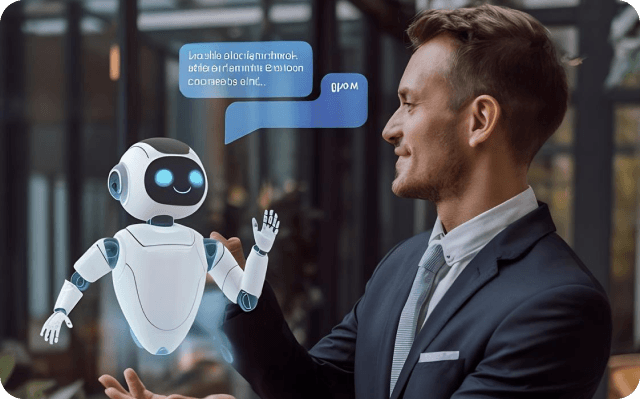
They can work across:
- Websites
- Facebook Messenger
- Mobile apps
- Customer portals
How Chatbots Reduce Support Costs by 60%
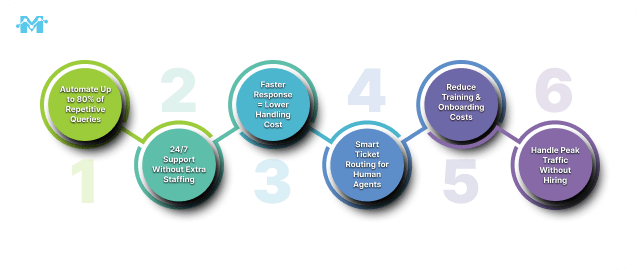
1. Automate Up to 80% of Repetitive Queries
Most support tickets are repetitive:
- Order status
- Password resets
- Pricing questions
- Appointment bookings
- FAQs
Chatbots instantly handle these without human involvement.
Result: Fewer tickets = fewer agents required.
2. 24/7 Support Without Extra Staffing
Human agents need shifts, overtime, and holidays.
Chatbots:
- Work 24/7
- Handle unlimited conversations
- Never get tired
Result: Zero overtime costs, full-time availability.
3. Faster Response = Lower Handling Cost
Chatbots respond in seconds, not minutes.
This:
- Reduces average handling time
- Resolves issues faster
- Prevents repeat follow-ups
Result: Lower cost per ticket.
4. Smart Ticket Routing for Human Agents
When a chatbot can't solve an issue, it:
- Collects user details
- Understands intent
- Routes tickets to the right agent
Agents spend time solving, not qualifying.
Result: Higher agent productivity.
5. Reduce Training & Onboarding Costs
Training new agents takes time and money.
Chatbots:
- Learn once
- Scale infinitely
- Follow consistent rules
Result: No recurring training expenses.
6. Handle Peak Traffic Without Hiring
During sales, launches, or campaigns:
- Support tickets spike
- Hiring temporary agents is costly
- Chatbots scale automatically
Result: No seasonal staffing costs.
Industries Seeing the Biggest Savings
Chatbots are reducing costs across:
- E-commerce
- SaaS platforms
- Healthcare
- Banking & fintech
- Real estate
- Travel & hospitality
Many businesses report 40–60% reduction in support expenses within months.
Chatbots vs Human Support: Cost Comparison
| Feature | Human Support | AI Chatbots |
|---|---|---|
| Availability | Limited hours | 24/7 |
| Cost per interaction | High | Near zero |
| Scalability | Limited | Unlimited |
| Response time | Minutes | Seconds |
| Training cost | Ongoing | One-time |
Beyond Cost: Extra Benefits of Chatbots
Chatbots also:
- Improve customer satisfaction
- Increase lead conversions
- Collect user insights
- Support multiple languages
- Integrate with CRMs & dashboards
This makes them a growth tool, not just a support tool.
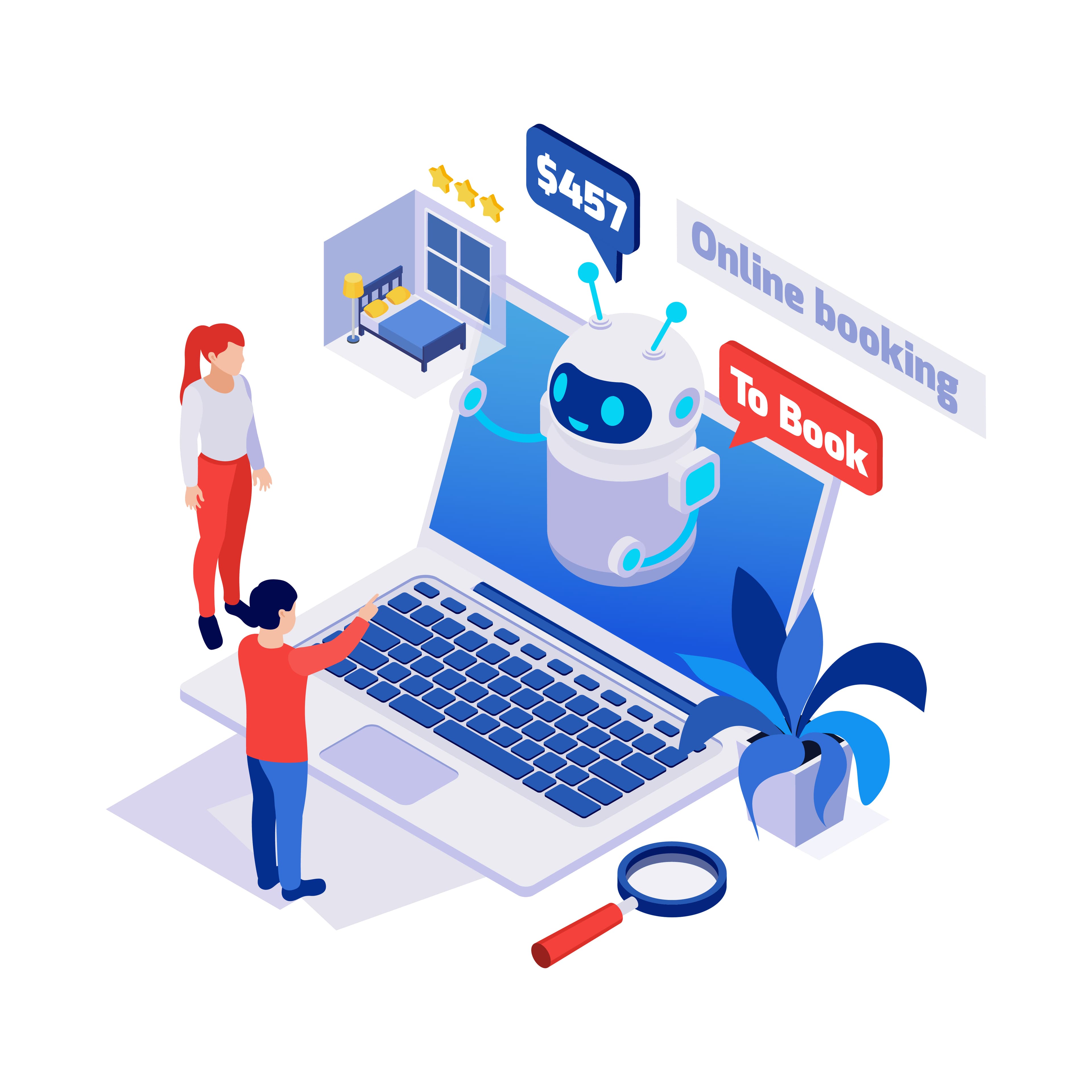
How Mehdi Technologies Builds Cost-Saving Chatbots
At Mehdi Technologies, we design AI-driven chatbots that:
- Automate real business workflows
- Integrate with websites, WhatsApp, and apps
- Connect with CRMs, ERPs, and dashboards
- Use NLP, LLMs, and smart automation
- Scale with your business
We don't build generic bots, we build ROI-focused AI systems.
Is a Chatbot Right for Your Business?
You should consider chatbots if:
- Your support team is overloaded
- You handle repetitive queries
- You want 24/7 support
- You aim to reduce operational costs
- You want better customer experience
Final Thoughts
Chatbots are no longer optional, they're a competitive advantage.
By automating repetitive support tasks, enabling 24/7 assistance, and boosting agent efficiency, chatbots can cut support costs by up to 60% while delivering better customer experiences.