The internet is evolving , again.
From static web pages to interactive platforms and now decentralized ecosystems, Web3.0 is redefining how data, ownership, and trust work online.
In this guide, we'll break down what Web3.0 is, how it's transforming the internet, and why businesses, startups, and developers should care right now.
What Is Web3.0? (A Simple Explanation)
Web3.0, also known as the decentralized web, is the next phase of the internet built on blockchain technology, smart contracts, and peer-to-peer networks.
Unlike Web2.0, where platforms control user data, Web3.0 gives ownership back to users.
Key Web3.0 Technologies
- Blockchain
- Smart Contracts
- Decentralized Applications (dApps)
- Cryptocurrencies & Tokens
- NFTs
- Decentralized Identity (DID)
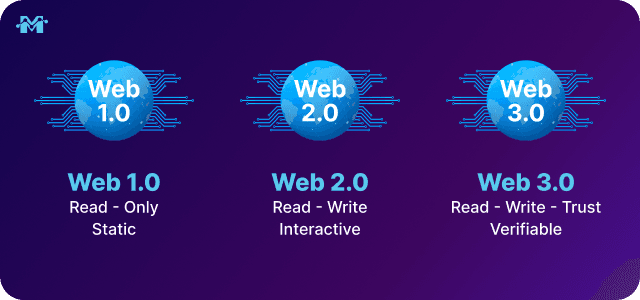
Web1 vs Web2 vs Web3 , What Changed?
Web1 (Read-Only Internet)
Static websites with limited interaction.
Web2 (Social & Platform-Driven Internet)
User-generated content, social media, and centralized platforms controlling data.
Web3 (User-Owned Internet)
Users own their data, assets, and identity through blockchain technology.
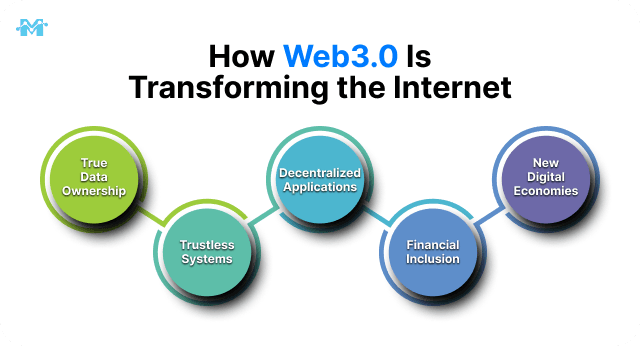
How Web3.0 Is Transforming the Internet
1. True Data Ownership
Users control their personal data, digital identity, and assets instead of third-party platforms.
2. Trustless Systems via Smart Contracts
Smart contracts enable automated, transparent, and secure transactions without intermediaries.
3. Decentralized Applications (dApps)
Applications run on blockchain networks, reducing downtime, censorship, and single points of failure.
4. Financial Inclusion with DeFi
Decentralized finance allows anyone with internet access to use financial services without banks.
5. New Digital Economies (NFTs & Tokens)
Creators can monetize their work directly without relying on centralized platforms.
Web3.0 Use Cases Across Industries
Finance
- DeFi platforms
- Crypto payments
- Tokenized assets
Gaming
- Play-to-Earn ecosystems
- NFT-based digital assets
- On-chain economies
Supply Chain
- Transparent product tracking
- Fraud prevention and traceability
Healthcare
- Secure medical records
- Patient-controlled data access
Social Media
- Decentralized platforms
- Creator ownership and monetization
Benefits of Web3.0 for Businesses
- Enhanced security and transparency
- Reduced operational costs
- Global accessibility
- Community-driven growth
- Ownership-based business models

Challenges of Web3.0 (What You Should Know)
Scalability
Blockchain networks are still improving transaction speed and cost efficiency.
User Experience
Wallet setup and onboarding can be complex for non-technical users.
Regulations
Web3 regulations vary by country and are still evolving globally.
Despite these challenges, Web3 adoption is accelerating rapidly.
Why Now Is the Right Time to Build in Web3
Web3.0 is still in its early stage , similar to the internet in the 1990s.
Early adopters are shaping the future of digital ownership, finance, and applications.
Businesses that move now gain long-term competitive advantage.
How Mehdi Technologies Helps You Build Web3 Solutions
At Mehdi Technologies, we help businesses design, build, and scale Web3 products, including:
- Smart Contract Development
- Decentralized App (dApp) Development
- NFT Marketplace Development
- Token Development
- Web3 Integrations
- Blockchain Consulting
We work with startups and enterprises across Pakistan, UAE, USA, and globally.