
Next.js has become one of the most talked‑about frameworks in web development, not because it’s trendy, but because it solves real problems that modern apps face around performance, scalability, developer productivity, and SEO. In this article, we’ll break down why Next.js isn’t just a tool, it’s the future of web development.
What Is Next.js?
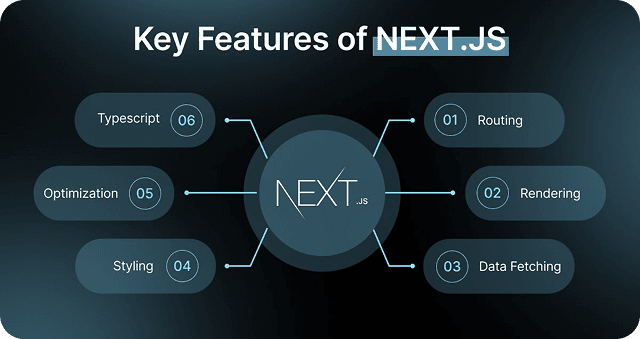
Next.js is a React framework built by Vercel that brings:
- Server‑Side Rendering (SSR)
- Static Site Generation (SSG)
- Incremental Static Regeneration (ISR)
- API routes
- Edge functions
- Hybrid rendering
Unlike traditional Single Page Apps (SPAs), Next.js gives developers the power of React with built‑in performance tools and modern deployment workflows.
The Core Problems Web Dev Currently Faces
Modern apps have a few major hurdles:
- Performance issues: Heavy JavaScript bundles slow everything down.
- SEO limitations: Client-side rendered apps struggle to rank.
- Scalability complexity: Hard to maintain consistent UX across user growth.
- Developer bottlenecks: Lack of standard architecture slows teams down.
Next.js tackles all of these head‑on.
Next.js Performance Advantages
Server‑Side Rendering (SSR)
Pre‑renders pages on the server, resulting in:
- Faster First Contentful Paint
- Better perceived performance
- Users see content faster
Static Site Generation (SSG) & ISR
Pre‑build pages at build time, update them intelligently without redeploys, ideal for sites with rapid content updates.
Automatic Code Splitting
Next.js only loads what’s needed, decreasing load times and reducing bandwidth usage. In 2026 and beyond, performance isn’t optional, it's a ranking and user‑retention factor. Next.js is optimized for it by default.
SEO & Server‑Side Strength

Traditional SPAs often struggle with SEO because search crawlers don’t easily index dynamic content. Next.js fixes this:
- SSR pages are search engine friendly
- Metadata and Open Graph tags supported at the page level
- Faster load times improve Core Web Vitals (a Google ranking signal)
For content‑driven apps and eCommerce apps alike, Next.js delivers direct SEO value.
Developer Experience & Productivity
Next.js is not just about performance, it’s about developer happiness:
- Zero configuration build system
- File‑based routing
- Fast refresh (instant feedback on code changes)
- API routes built‑in
- Great TypeScript support
Teams write less boilerplate and get consistent builds, shortening development cycles and reducing bugs.
Edge Computing & Global Scale
With edge functions, Next.js apps can run close to the user instead of at a central server location, enabling:
- Ultra‑fast global delivery
- Reduced latency
- Personalized experiences at scale
This positions Next.js as a true global framework, not just a local one.
Versatility: From Static Sites to Full Apps
Next.js is not a one‑trick pony, it’s suitable for:
- Marketing sites
- Blogs & Docs
- eCommerce stores
- Dashboards
- SaaS products
- Real‑time apps
This versatility reduces tech stack complexity and increases long‑term maintainability.
Strong Community & Ecosystem Growth
Next.js is backed by:
- A rapidly growing developer base
- Solid ecosystem (plugins, templates, integrations)
- Tools like NextAuth, TailwindUI support
This means less reinvention and more reusable solutions, accelerating delivery.
Real World Adoption & Case Studies
Big names and high‑traffic platforms use Next.js because it:
- Scales reliably
- Improves performance
- Integrates easily with modern workflows (Jamstack, headless CMS)
Examples include companies across tech, eCommerce, marketing, and media.
Is Next.js Best for Your Business?
Ask yourself:
- Do you need strong SEO?
- Do you want fast global performance?
- Is your app content‑heavy or interactive?
- Do you want a single stack that handles frontend + backend APIs?
If the answer is yes, Next.js should be on your shortlist.
Future Trends with Next.js
In 2026 and beyond, expect Next.js to evolve around:
- Even deeper edge integration
- Real‑time and streaming UI patterns
- Enhanced AI + data fetching tools
- Tighter integrations with cloud providers
- Better DX with AI‑assisted development
Next.js is not stagnant, it’s shaping the future of scalable web development.
Final Thoughts
Next.js is not just another framework, it’s an evolution in web engineering. It combines performance, SEO, scalability, and developer experience in one package.
If you want your product to perform in 2026 and beyond, Next.js is one of the smartest bets you can make.