User Experience (UX) isn’t a luxury, it’s a business-critical factor that determines whether users stay, engage, and convert or leave, frustrated and unimpressed. Today’s products don’t just need to work, they need to feel right.
In this article, we’ll explore why UX can make or break your product, backed by real examples, business outcomes, and practical insights you can apply right now.
1. What Is UX (User Experience)?

User experience is how people feel when they interact with your product. It covers everything from:
- Ease of navigation
- Visual hierarchy
- Page/feature discoverability
- Emotional resonance
- Accessibility
Good UX means users can complete goals quickly, enjoyably, and without frustration.
2. Why UX Matters More Than Ever
Today’s users have zero patience for friction:
- Slow interfaces
- Confusing flows
- Hidden features
- Inconsistent design
Those products get deleted, ignored, or replaced. UX shapes first impressions, and first impressions often mean user retention or churn.
3. The Business Case for UX
Good UX is not a design fad, it drives measurable business outcomes.
Impact on Key Metrics
- Increased conversion rates
- Lower bounce rates
- Higher retention and repeat usage
- Greater customer satisfaction
- More positive reviews
In many cases, improving UX leads to a higher ROI than adding new features.
4. Real-World Impact: When UX Succeeds
Case Study: Onboarding Done Right
A FinTech app redesigned its onboarding process. Before: 8 steps with confusing fields After: 4 steps, contextual help, progress bar Result: 40% improvement in completed signups
Small UX changes can cause big results.
5. When UX Fails: Common Pitfalls
Bad UX is surprisingly common, and often subtle.
Typical Broken Patterns
- Hidden navigation
- Long, unscannable pages
- Tiny touch targets
- Confusing error messages
- Inconsistent UI patterns
These issues may seem small, until user frustration spikes.
6. Key UX Principles Every Product Should Follow
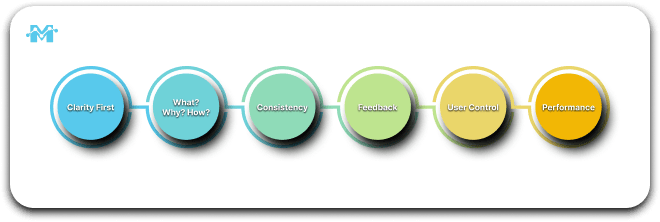
Clarity First
Every interface must answer:
What? Why? How?
Users should never ask: “Now what?”
Consistency
Use consistent UI patterns, colors, and interactions.
Feedback
Interfaces should tell users what’s happening, loading states, success messages, errors.
User Control
Users should be able to undo, retry, or exit actions without fear.
Performance
Fast experiences = perceived quality. Speed is UX too.
7. UX & Conversion: The Direct Link
Many businesses focus on features before experience, but experience is what drives conversion.
Here’s how UX impacts conversion directly:
- Clear CTAs increase click-through rates
- Simplified flows reduce abandonment
- Better readability increases comprehension
- Visual hierarchy influences decision-making
Good UX is conversion optimization by design.
8. Measuring UX Success
UX isn’t subjective, you can measure it:
Quantitative Metrics
- Bounce rate
- Session duration
- Task completion rate
- Funnel drop-offs
Qualitative Feedback
- User interviews
- Usability testing
- Customer support trends
- Surveys & NPS
Together, these tell a story about real user experience.
9. How to Improve UX in Your Product
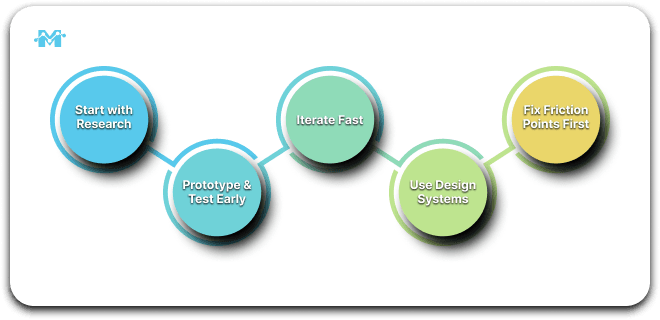
Start with Research
User interviews, analytics, heatmaps, understand behavior before redesigning.
Prototype & Test Early
Don’t code first. Prototype and validate with real users.
Iterate Fast
Launch small improvements quickly and measure outcomes.
Use Design Systems
Consistency = usability. Reuse patterns and components.
Fix Friction Points First
Identify where users drop off, those areas need priority attention.
10. Final Thoughts
UX isn’t an aesthetic choice, it’s a business survival skill. Great UX attracts users. Bad UX repels them.
In a world of choices, experience is the deciding factor.